When Disagreement at Work Becomes Personal

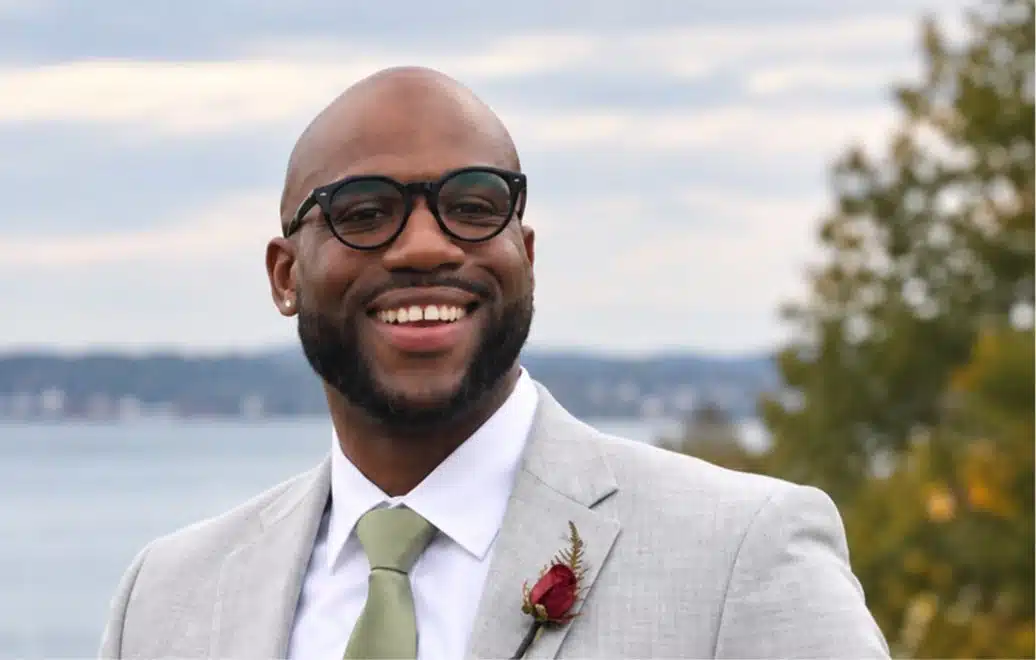
Camille Bradbury is Editor-in-Chief of HRinsidr, where she translates evolving compliance and employment law developments into practical guidance for HR leaders. She has partnered with entrepreneurs, corporate teams, nonprofits, and government agencies to navigate legal complexity and operational growth, supporting organizations from early-stage startups to multimillion-dollar enterprises. Her work focuses on helping HR lead high-stakes people decisions with clarity and confidence.
—
The Real Risk Is Not Difference of Opinion
It does not have to be election season for tension to show up at work.
The country is still divided. Social media fuels outrage. Headlines feel personal. None of that stops at the office door.
We like to think workplace conflict is about strategy, budgets, or timelines. More and more, though, disagreement feels deeper than that. It feels like values. Identity. Character.
Somewhere along the way, we stopped saying, “I do not agree with that idea,” and started thinking, “I do not trust your judgment.”
That shift is subtle, but it is where culture begins to erode.
The problem is not difference of opinion. It is how quickly we move from observation to assumption.
The Ladder We Climb Without Realizing It
Organizational psychologist Chris Argyris described something called the Ladder of Inference, later popularized in The Fifth Discipline by Peter Senge. It explains the mental steps we climb, often in seconds, when forming conclusions.
It looks like this:
- We observe something.
- We select certain details.
- We assign meaning to those details.
- We build a story.
- We draw a conclusion.
- We take action.
We do not realize we are doing it, but we are. All the time.
A Workplace Example: Return to Office Tension
Imagine two colleagues in a leadership meeting debating a return-to-office policy.
One argues that employees need to be back in person three days a week to maintain accountability and performance. The other pushes back, advocating for continued flexibility and trust-based management.
On the surface, this is a policy disagreement.
Here is how the ladder quietly enters the room.
The flexible-work advocate hears “three days in office” and immediately selects certain data: control, micromanagement, outdated leadership style. She builds a story. He does not trust employees. He does not understand modern workforce dynamics. She concludes he is rigid and disconnected.
Meanwhile, the in-office advocate hears “remote flexibility” and selects different data: declining collaboration, loss of culture, reduced productivity. He builds his own story. She prioritizes comfort over accountability. He concludes she lacks discipline.
Now it is no longer a strategic conversation. It is personal.
Neither person said those things. The stories were constructed anyway.
That is the Ladder of Inference at work.
Why We Climb the Ladder So Fast
In today’s climate, politically, socially, culturally, we climb that ladder faster than ever. Add to that our cognitive biases.
How Leaders Can Interrupt the Pattern
The answer is not banning difficult conversations. It is slowing them down.
In that return-to-office debate, a leader trained in the Ladder of Inference might say:
“I am noticing we may be assigning motives here. Before we jump to conclusions, can we clarify what concern is driving each of you?”
That question moves the conversation down the ladder.
Instead of defending positions, the discussion shifts to assumptions.
The in-office advocate may reveal he is worried about mentoring junior employees who seem disengaged.
The flexibility advocate may reveal she is focused on retention data showing employees leave when autonomy disappears.
Now the conversation is about risk, data, and priorities. Not character.
Where This Shows Up Every Day
This is not just about policy debates.
A manager assumes a direct report is disengaged because they are quiet in meetings.
A team member assumes a colleague is exclusionary because they were not invited to a conversation.
A leader assumes resistance equals defiance instead of fear.
Each situation begins with observation and ends with action, often without testing the story in between.
When those stories go unchecked, trust erodes.
The Opportunity for HR
The workplace is one of the last environments where people with fundamentally different experiences, values, and perspectives must collaborate toward a shared goal.
That is not a liability. It is a training ground.
HR does not need to moderate every disagreement. But HR can:
- Teach the Ladder of Inference in leadership development.
- Provide training on cognitive bias.
- Reinforce expectations for civil discourse.
- Coach managers to respond with curiosity instead of assumption.
When we help leaders examine how they arrived at their beliefs, we reduce reaction and increase clarity.
We do not need everyone to agree. We need them to think clearly.
Difference of opinion is not the cultural threat. Unexamined assumptions are.
In a world that rewards speed and outrage, the most strategic skill we can teach is the ability to pause before climbing the ladder.
The information contained in this site is provided for informational purposes only, and should not be construed as legal advice on any subject matter.
 HR Profession
On his podcast The Business of Alignment and through his sales-intelligence operation Pulse HR, AJ Vaughan has had more than 1,000 conversations with CHROs, founders and HR tech leaders about what makes organizations work. Here are the 5 things he can't do his job without.
 Compensation and Benefits
Last week we asked how much of your 2027 health increase you're planning to pass along to employees, and the most popular answer was none of it. Here's why we think you answered that way.
 News & Compliance
The NLRB confirmed its standard for disciplining misconduct during protected activity, California signed 4 workplace technology laws, and a second federal court blocked the policies behind the $100,000 H-1B payment. California's first deadlines arrive January 1.