
HR Civility Toolkit
Practical Tools to Cultivate Respectful Communication, Healthy Relationships, and Employee Well-Being
Civility is not about avoiding hard conversations. It’s about caring for employee well-being while giving leaders the skills to communicate clearly, navigate tension, and build psychologically safe teams.
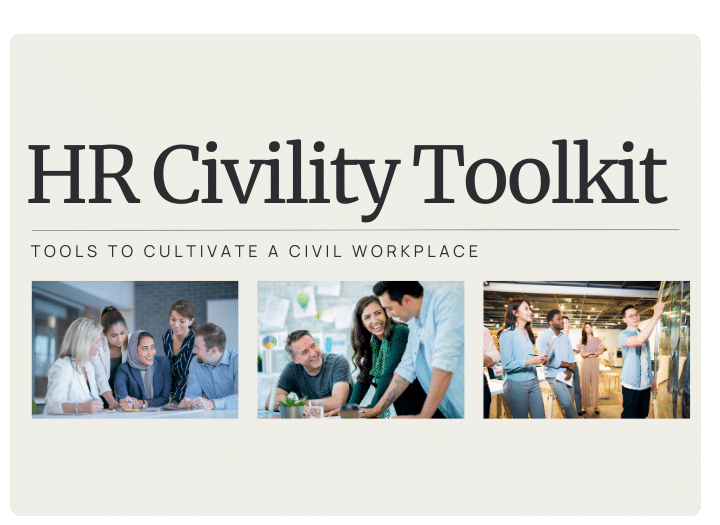

Practical Tools to Cultivate Respectful Communication, Healthy Relationships, and Employee Well-Being
Workplace incivility doesn’t usually start with major conflict. It shows up as stress, miscommunication, disengagement, and burnout. When pressure is high, relationships suffer, emotions escalate, and trust erodes. The HR Civility Toolkit equips HR teams with practical, research-backed tools to address these issues proactively before they turn into turnover, complaints, or burnout.
Civility is not about avoiding hard conversations. It’s about caring for employee well-being while giving leaders the skills to communicate clearly, navigate tension, and build psychologically safe teams.
Why This Toolkit Matters
Nearly all HR professionals report experiencing burnout, while employees increasingly cite work as a major source of stress. Civility challenges are closely tied to leadership behavior, communication breakdowns, and unmanaged stress. This toolkit gives HR a structured, neutral way to influence culture, engagement, and well-being without adding policy or complexity.
What’s Inside
Relationships & Communication Tools
Help leaders and employees communicate with clarity and respect even in high-stakes or emotional situations.
- Social Styles – Understand different communication preferences to reduce misunderstandings
- Nonviolent Communication – A framework to diffuse triggers and reach mutual understanding
- Crucial Conversations – Tools to stay calm and constructive during difficult dialogue
Employee Well-Being Tools
Support psychological safety, compliance, and sustainable work practices.
- Psychological Safety Survey (based on The 5 Dysfunctions of a Team)
- Building a Trauma-Informed Workplace resources
- Simplified FMLA / ADA Checklist
- HR Burnout Survey to assess HR’s own capacity to support others
Who This Toolkit Is For
- HR leaders addressing culture, stress, or engagement challenges
- Organizations navigating increased conflict or polarization
- Leaders who need practical communication tools—not theory
- HR teams seeking proactive, people-centered solutions
The Outcome
With the right tools in place, HR can reduce reactivity, strengthen trust, and build a more civil workplace. This toolkit helps organizations support employees, equip leaders, and create healthier cultures starting with care for the people doing the work.