
Workplace Investigation Checklists
For Fair, Defensible, and Trauma Informed Investigations
This resource is designed to support investigations that are neutral, compliant, and psychologically safe while reducing legal and reputational risk.
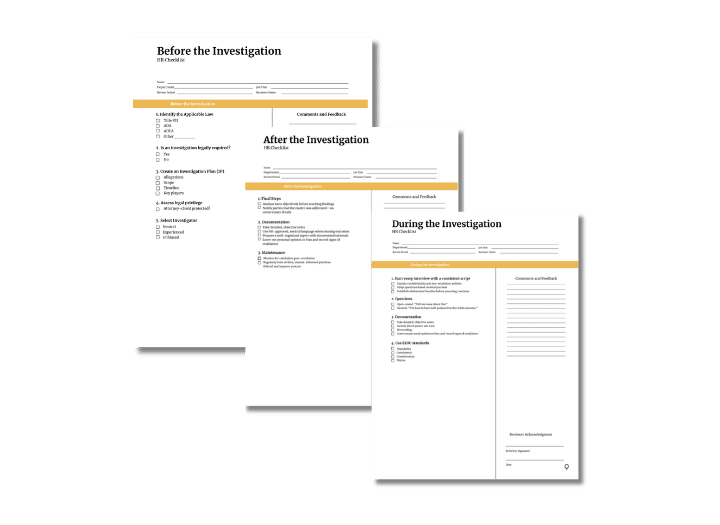

A Step by Step Framework for Fair, Defensible, and Trauma Informed Investigations
Workplace investigations require more than good intentions. They require consistency, legal awareness, and careful documentation to protect employees, organizational trust, and the business. The Workplace Investigation Checklists provide HR teams with clear guidance for what to do before, during, and after an investigation so nothing critical is missed.
Why This Toolkit Matters
Investigations often happen under pressure, when emotions are high and timelines are tight. Without structure, HR teams risk inconsistency, bias, delayed resolution, or documentation gaps that can undermine outcomes.
These checklists give HR a repeatable process that supports fairness, transparency, and defensibility across all types of investigations.
What’s Included
Before the Investigation
- Legal assessment checklist including Title VII, ADA, ADEA, and state law considerations
- Guidance to determine whether an investigation is legally required
- Investigation planning template covering scope, timeline, and key players
- Investigator selection criteria focused on neutrality and experience
- Legal privilege assessment
- Organizational trust reminders and common pitfalls to avoid
During the Investigation
- A consistent opening script to establish safety and non retaliation
- Interview guidance using open ended and neutral questions
- Documentation standards including objective notes and direct quotes
- EEOC evaluation criteria such as plausibility, consistency, corroboration, and motive
- Trauma informed interview language and power dynamic considerations
- Clear reminders on what not to do during interviews
After the Investigation
- Final steps checklist for findings and outcome communication
- Documentation and reporting standards using HR approved language
- Guidance for notifying parties without oversharing
- Retaliation monitoring checklist
- Maintenance practices including training, debriefs, and process improvement
Who This Toolkit Is For
- HR professionals conducting or supporting investigations
- Employee relations and compliance teams
- Organizations seeking consistency and reduced risk
- Leaders responsible for protecting trust and fairness
The Outcome
With these checklists, HR can conduct investigations that are thorough, fair, and respectful. This toolkit helps ensure decisions are grounded in facts, processes are defensible, and employees feel heard and protected throughout the investigation process.
Well run investigations do not just resolve issues. They reinforce trust.