
How Leaders Think: 5 Classification Types of HRIS

Finding the right HRIS system can feel overwhelming. That’s why it’s important to ask critical questions that focus on how your leadership team thinks and makes decisions so you can select a system that aligns with your organization’s needs.
Examples of questions to ask before selecting an HRIS system include:
- How does your leadership team make decisions?
- What is your company’s growth strategy?
- What tools do the recruiting, payroll, and IT teams currently use?
- How do your decision-makers approach technology adoption?
By answering these types of questions and reviewing the different classifications of HRIS systems, you can narrow your search and identify solutions that are better aligned with your business needs.
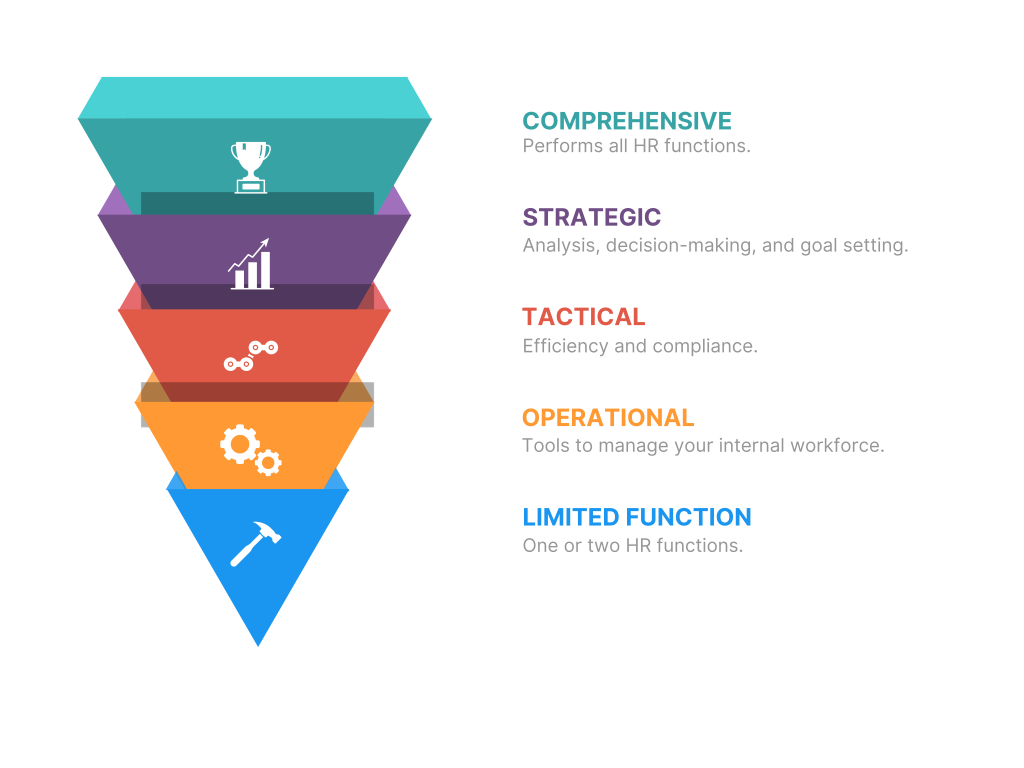
COMPREHENSIVE
A comprehensive HRIS is your one-stop shop to perform all HR functions. It supports strategic, tactical, operational functions all-in-one. With valuable insights, it is a robust and expensive option.
For Leaders Who Say:
“How does this employee’s role fit into the company’s goals?”
“I want to see all the data across payroll, recruiting, and HR before deciding.”
Best For: Reporting, Employee Management, and Growth
STRATEGIC
When you want a system that helps you make the best decisions by looking at the data, identifying trends, and enhancing your recruiting efforts: This type of thinking is strategic.
For Leaders Who Say:
“How do we develop skills?”
“Where are our role gaps?”
“What does the data say?”
Best For: Enhancing Hiring and Focused on Growth
Similar Systems: Bitrix24
TACTICAL
A tactical system is built for efficiency and compliance when managing compensation, recruiting, training, and benefits. Compensation and benefits features are your most expensive investment, and this option does it best.
For Leaders Who Say:
“What are our competitors doing?”
“Are our benefits being used by our workforce?”
“How can we use internal resources to support our growth initiatives?”
Best For: Recruitment, Training, Benefits, and Compensation
Similar Systems: TriNet
OPERATIONAL
Simply, manage your internal workforce with an operational HRIS. If you’re focused on recruiting internally and making lateral moves, this is the best option for you.
For Leaders Who Say:
“Let’s transfer that employee to work on another project.”
“Let’s promote from within our workforce.”
Best For: Employee Development and Retention
Similar Systems: Workable
LIMITED FUNCTION
For smaller organizations that only need one or two functions like payroll or benefits you’ll want a stripped-down version of an HRIS.
For Leaders Who Say:
“If only our payroll was more efficient.”
“We just need help in recruiting.”
Best For: New or small business with limited needs and budget
Similar Systems: Bitrix24
Analyzing how your leadership team makes decisions and understanding what matters most to them will help you determine which system is most compatible with their goals. When leadership requests data or a competitive analysis, the right HRIS system should equip you with the tools needed to deliver insights that support informed decision-making and demonstrate value to your team.
The information provided does not, and is not intended to, constitute legal advice. All information and materials are for general informational purposes only. Contact your attorney to obtain advice with respect to any legal matter.
 News & Compliance
The labor board's Advice Division cleared Microsoft to fire employees who organized a Gaza protest on campus, California sent the first ban on workplace emotion-tracking to the governor's desk, and the Second Circuit told the Board its dress code test is wrong.
-
News & Compliance
Washington proposed a per-hire immigration fee larger than most salaries, the labor board's top lawyer published her hit list, and Connecticut's omnibus workforce act starts running October 1. Two federal appeals courts landed on the same theme: what an employer writes after a complaint can matter more than the decision itself.
-
News & Compliance
DHS extended a $4,000 fee to routine H-1B extensions, and $4,500 to L-1s. Massachusetts and Illinois each added new employer reporting duties. A Fourth Circuit decision sharpened what the Americans with Disabilities Act demands when an employee asks for reassignment. Here are four developments for your fall planning.